"When can we swim?" is the question every pool builder hears. The honest answer is that the construction itself is often the quicker part. In California, design, engineering and permits can take as long as building the pool. Here is what a typical timeline looks like and what can stretch it.
The big picture
- Fiberglass pools usually install faster once permits are issued, because the shell arrives finished.
- Gunite pools take longer, with more stages and curing time between them.
- Permits vary a lot between California cities, from a short over-the-counter review in some places to many weeks of plan check in others.
Ask every builder for a written estimated timeline, including the permit stage.
Stage-by-stage timeline (gunite pool)
1. Design and contract
You meet builders, compare designs and bids, and sign a contract. This can take from a couple of weeks to a few months, depending on how quickly you decide.
2. Engineering and permits
The builder prepares plans, gets structural engineering and submits for a building permit. Hillside lots or poor soils may need a soils report. HOAs may need to approve the design first. This is often the most unpredictable stage.
3. Layout and excavation
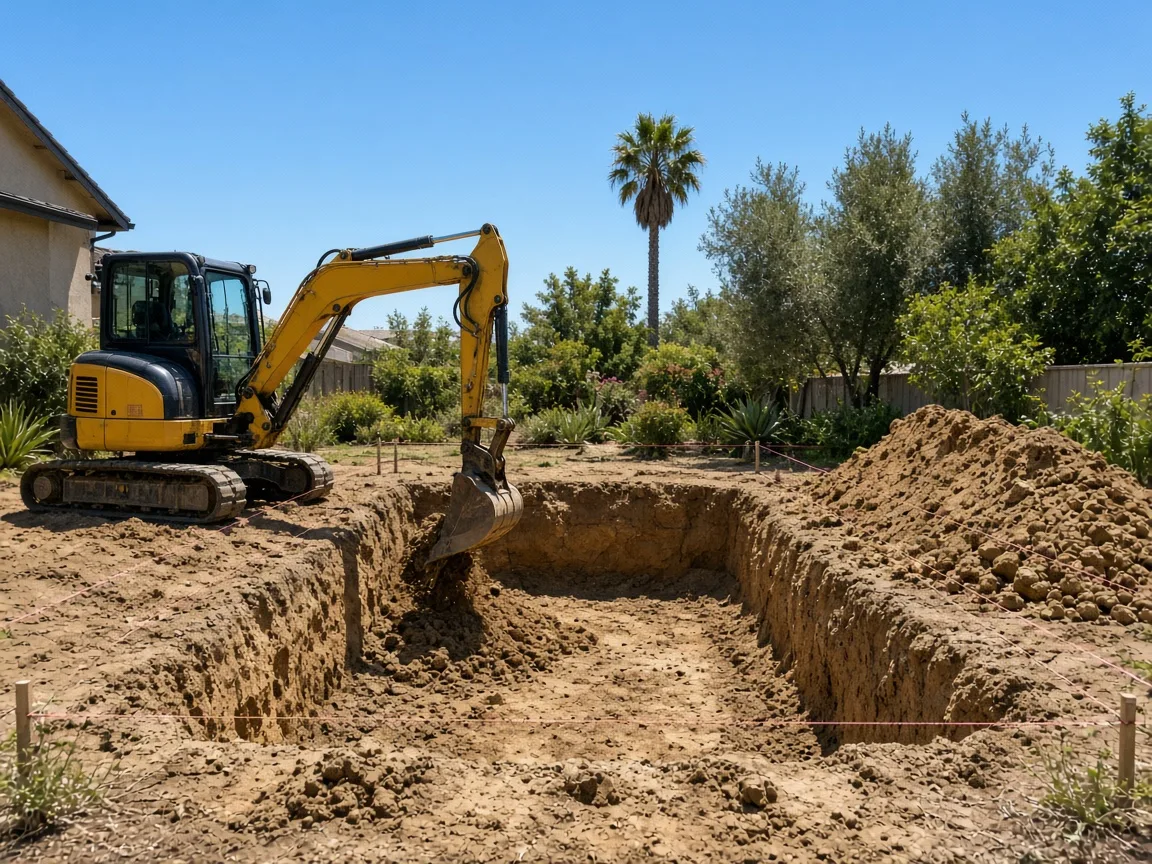
The pool is marked out and dug. Excavation itself is often a day or a few days, but haul-off from tight lots and digging into rock can stretch it.
4. Steel and plumbing
Rebar is set and plumbing runs to the equipment location. An inspection is typically required before the shell is sprayed.
5. Gunite or shotcrete
The shell is sprayed, usually in a day. It is then kept wet while the concrete cures, and builders let it cure before moving to finish work.
6. Tile, coping and equipment
Waterline tile, coping, the equipment pad and electrical work are installed, with more inspections along the way.
7. Decking
Concrete, pavers or stone go in around the pool. This can be a significant stage, especially for large outdoor living projects.
8. Interior finish and fill
The plaster, quartz or pebble finish is applied, and the pool is filled right away. A start-up period of careful chemistry and brushing follows.
9. Final inspection
The city signs off, including the required drowning-prevention safety features.
Fiberglass timeline differences
For fiberglass, the steps after permits are: excavation, setting the shell by crane, plumbing and backfill, then coping, decking and equipment. Because there is no shell to spray and cure, many projects move faster. Shell availability from the manufacturer can affect the schedule, so ask about lead times.
What causes delays
- Permits and plan check backlogs.
- Weather. Rain affects excavation, gunite and decking.
- Unexpected rock, groundwater or poor soil.
- Inspection scheduling between stages.
- Change orders. Adding a spa or changing the design mid-build.
- Subcontractor scheduling. Pool building relies on several specialist crews.
- Material or equipment supply problems.
- HOA approvals.
When to start for summer
Many California families want to swim by Memorial Day or the Fourth of July. Because design and permits take time, the best time to start talking to builders is often fall or winter. Builders tend to be busiest in spring, so starting earlier can mean faster scheduling. In much of Southern California you can build year-round, so there is no "wrong" season, only busier ones.
How to keep your project on track
- Choose a builder with a clear process and good recent reviews about communication.
- Finalize the design before permits are submitted.
- Ask who manages the permit and inspection process.
- Make decisions on tile, finish and equipment early.
- Clear the access path and keep pets and kids away from the site.
- Keep a written list of questions for scheduled check-ins.
Bottom line
Expect the full process to take longer than the construction alone, with permits a big variable in California. Start early, choose a licensed builder with a clear schedule, and lock your design before plans go to the city. Browse local builders and their reviews on our city pages.
Finding a pool builder near you
Our directory covers every California city with at least 20,000 residents. Each city page ranks local pool builders by Google rating weighted by review count, so a builder with hundreds of strong reviews ranks above one with a handful. Where we could confidently match a business to the Contractors State License Board's public license file, we show a CSLB License Verified badge with the license number. Use the filters on each city page to narrow the list to gunite, fiberglass, spa, remodel or decking specialists, then request quotes from at least three builders.
Frequently asked questions
How long does pool construction usually take?
Construction alone often takes several weeks for fiberglass and longer for gunite. Add the time for design and permits, which varies by city.
How long does pool concrete take to set?
Gunite or shotcrete sets quickly but keeps curing for weeks. Builders keep it wet and wait before applying finishes, following their engineer's and standard industry guidance.
What is the best time of year to build a pool in California?
Starting the design and permit process in fall or winter often lets you swim by summer. Much of California allows year-round construction.
What are the steps to building a pool?
Design and contract, engineering and permits, excavation, steel and plumbing, shell, tile and equipment, decking, interior finish and fill, then final inspection.
This guide is general information, not legal, tax or financial advice. Costs vary by property and builder. Last updated November 2026.