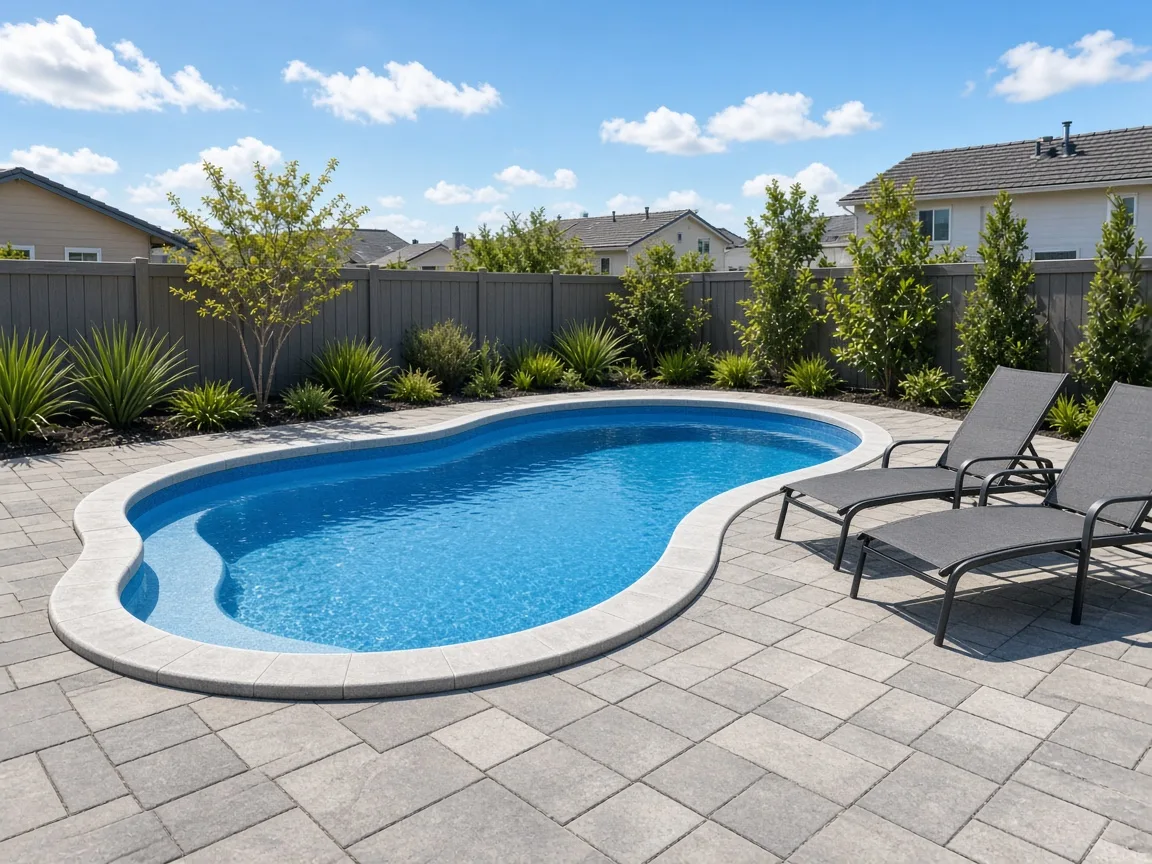
The first big decision in almost every California pool project is the shell. Gunite (sprayed concrete, also called shotcrete) and fiberglass are the two dominant choices here, while vinyl liner pools are less common in the state. Each has real strengths. The right pick depends on your yard, your design goals and how long you plan to stay.
Quick definitions
Gunite / shotcrete. Builders excavate, set a steel rebar cage, then spray concrete to form the shell on site. Gunite uses a dry mix wetted at the nozzle, and shotcrete arrives wet. Homeowners use the terms almost interchangeably, and for most buyers the quality of the crew matters more than the method. The shell then gets tile, coping and an interior finish such as plaster, quartz or pebble.
Fiberglass. A one-piece shell built in a factory, trucked to your home and lowered into a prepared hole, usually by crane. Plumbing, backfill, coping and decking finish the job.
Side-by-side comparison
- Design freedom. Gunite wins. Any shape, size or depth, plus beach entries, tanning ledges, swim-up benches, vanishing edges and attached spas. Fiberglass is limited to the manufacturer's molds, though many now include built-in steps, benches and ledges.
- Install time. Fiberglass is usually faster once permits are issued, because the shell arrives finished. Gunite involves more stages and curing time.
- Up-front cost. It varies. Fiberglass is often competitive with or lower than a comparable gunite pool, but crane fees, freight and access in tight California yards can close the gap. Large or highly customized pools almost always point to gunite.
- Surface feel. Fiberglass gelcoat is smooth. Plaster and pebble finishes are more textured, and pebble in particular can feel rough to some swimmers.
- Maintenance. Many fiberglass owners report fewer algae problems and lower chemical use, since the surface is non-porous. Concrete finishes are porous and need consistent brushing and water chemistry.
- Long-term costs. Gunite pools eventually need resurfacing, and how often depends on the finish and how well the water is balanced. Fiberglass gelcoat can fade or need refinishing over many years, but full resurfacing is generally less frequent.
- Size limits. Fiberglass shells must fit on a truck and usually top out around 16 feet wide. Gunite has no practical size limit.
California-specific factors
Backyard access. Many California lots, especially older coastal neighborhoods, have narrow side yards and power lines. A fiberglass shell needs a clear crane path from the street. If that is impossible, gunite with smaller excavation equipment may be the only option.
Expansive soils and slopes. Clay soils that swell and shrink are common in parts of the state. Both pool types need proper engineering and drainage. Gunite pools can be engineered for steep hillside sites, while fiberglass installs on slopes need careful backfill and retaining work.
Earthquakes. Both types are built to code for your location. A good engineer and a reputable builder matter more than the shell material.
Water and drought awareness. Pool volume drives evaporation and refill needs. A modest size and a good cover reduce water and heating loss whichever shell you choose. Some water districts have rules during drought periods, so check locally.
Sun and UV. Long, hot summers in the Central Valley and inland Southern California are hard on finishes. Darker plaster colors can show mottling over time, and gelcoat can fade. Ask builders about UV-stable finish options.
Who should choose gunite
- You want a custom shape, a large pool, a spa spillover or a vanishing edge.
- Your yard has difficult access for a crane.
- You plan to stay in the home a long time and want the highest design flexibility.
Who should choose fiberglass
- You want a quicker install and a standard size works for you.
- You like a smooth surface and want lower day-to-day chemical use.
- Your yard has good crane access from the street.
Questions to ask builders
- Do you build both types, or only one? (Builders who sell one type will naturally favor it.)
- What brand and model of fiberglass shell, and what is the manufacturer warranty?
- For gunite, what shell thickness and steel schedule do the engineered plans call for?
- What interior finish is included, and what are the upgrade options?
- Who handles the crane, permits and haul-off, and are those costs in the bid?
- Can you show me a completed pool of this type from a few years ago?
Always confirm the builder's license on the CSLB website before signing. Most pool builders hold the C-53 Swimming Pool classification.
Bottom line
Neither material is "best" for everyone. Gunite gives California homeowners unlimited design options and handles tough sites. Fiberglass offers speed, a smooth finish and often easier upkeep when your yard can take a crane. Get a quote for each from licensed local builders and compare the full 10 to 15 year cost, not just the price on day one.
Finding a pool builder near you
Our directory covers every California city with at least 20,000 residents. Each city page ranks local pool builders by Google rating weighted by review count, so a builder with hundreds of strong reviews ranks above one with a handful. Where we could confidently match a business to the Contractors State License Board's public license file, we show a CSLB License Verified badge with the license number. Use the filters on each city page to narrow the list to gunite, fiberglass, spa, remodel or decking specialists, then request quotes from at least three builders.
Frequently asked questions
Are gunite and concrete pools the same?
Yes, essentially. Gunite and shotcrete are two methods of spraying concrete to form a pool shell. Both produce a concrete pool.
Are fiberglass pools cheaper than gunite?
Often at a similar size, but not always. In California, crane, freight and access costs can make fiberglass close in price to a simple gunite pool.
What are the downsides of fiberglass pools?
Limited sizes and shapes, a maximum width set by shipping limits, and the need for clear crane access to your backyard.
Which lasts longer, gunite or fiberglass?
Both shells can last for decades with proper installation. Gunite needs periodic resurfacing of the interior finish, while fiberglass gelcoat typically needs less frequent refinishing.
This guide is general information, not legal, tax or financial advice. Costs vary by property and builder. Last updated November 2026.