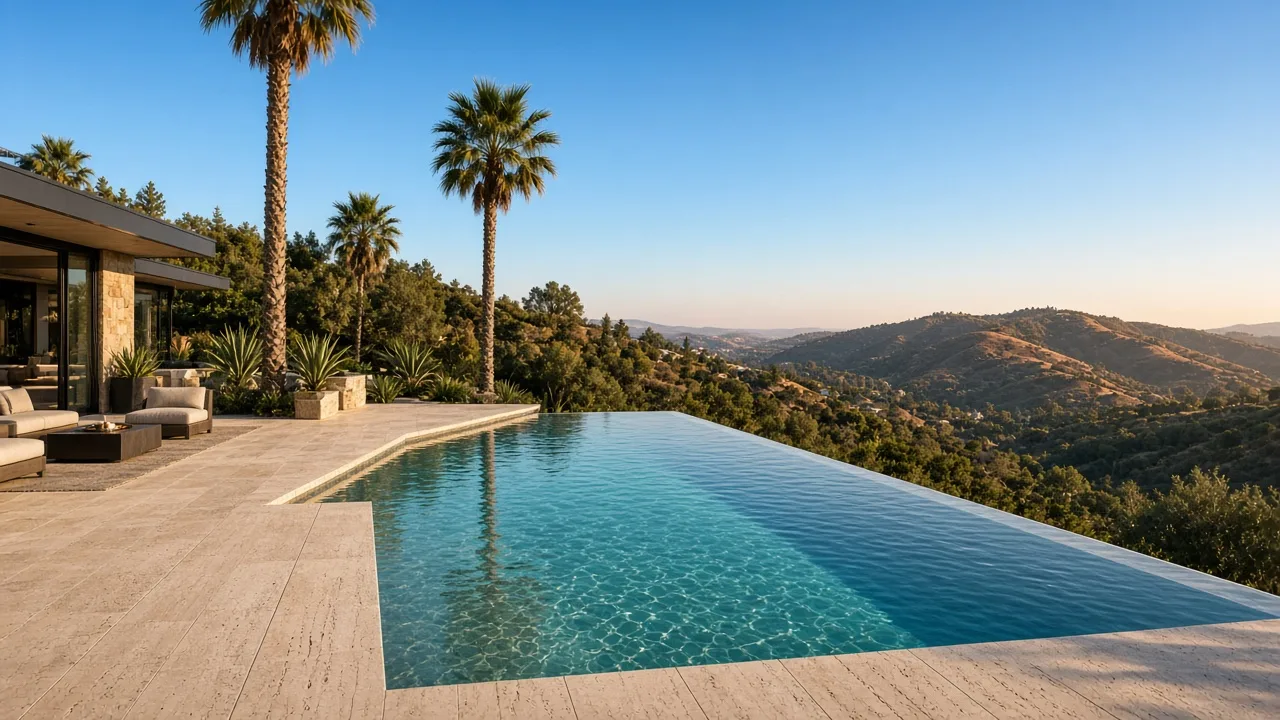
Ask ten California pool builders what a pool costs and you will hear ten versions of "it depends." That is not a dodge. A backyard pool is a custom construction project, and in California the price is shaped by labor rates, soil, access, permits and the finish level you pick. This guide explains what actually moves the number so you can read quotes with confidence.
The short answer
Builders and homeowners across California commonly report full-project quotes for a new inground pool in a wide band, often somewhere from the mid five figures for a simple fiberglass or basic gunite package to well into six figures for a custom gunite pool with a spa, water features, lighting and new decking. Coastal metros like the Bay Area, Los Angeles, Orange County and San Diego tend to price higher than the Central Valley or Inland Empire because labor, permits and access cost more. Treat any number you see online, including ours, as a starting point. The only reliable figure is a written, itemized bid for your yard.
What you are actually paying for
A pool quote bundles many trades. Knowing the pieces helps you compare apples to apples.
- Design and engineering. Most cities require stamped structural plans for gunite pools. Hillside lots, expansive clay soil or pools near a foundation or slope may need a soils report and extra engineering.
- Permits and fees. City or county building permits, plan check and inspections. Fees vary a lot by city.
- Excavation and haul-off. Digging is only part of it. Removing tons of dirt from a tight side yard with no machine access can cost far more than the dig itself.
- Steel, plumbing and electrical. Rebar, plumbing runs to the equipment pad, bonding and a dedicated electrical circuit. Long runs or a panel upgrade add cost.
- Shell. Gunite or shotcrete for concrete pools, or the factory-made shell for fiberglass.
- Tile, coping and interior finish. Plaster is the budget option. Quartz and pebble finishes cost more but usually last longer.
- Equipment. Pump, filter, heater or heat pump, automation, sanitizer system and lighting. California rules for pool pumps push builders toward variable-speed models.
- Decking and hardscape. Concrete, pavers or stone around the pool is often a big share of the total and is sometimes quoted separately.
- Safety features. California requires new residential pools to have at least two of seven listed drowning-prevention features, such as an enclosure, a safety cover or door alarms.
- Landscaping, fencing and cleanup. Often excluded from the base price.
Why California costs more than the national averages you see online
Most national "average pool cost" articles blend markets with very different prices. California adds a few specific costs:
- Higher labor and subcontractor rates in most metros.
- Stricter plan check and inspection processes in many cities.
- Hillside and expansive-soil engineering, especially in parts of Southern California and the Bay Area.
- Tight urban lots where crews must hand-dig or use small machines and many truckloads to haul soil.
- Energy-efficiency requirements for pumps and lighting under state appliance rules.
Cost by pool type
Gunite or shotcrete (concrete). The most common choice for custom pools in California. Fully custom shape, size, depth, beach entries, tanning ledges and spas. Usually the most expensive up front, and it takes the longest to build. Interior finishes need replastering or resurfacing over the years.
Fiberglass. A one-piece shell set into the ground. Often faster to install and smooth to the touch, with lower chemical use for many owners. Sizes and shapes are limited to what manufacturers make and what can be trucked and craned into your yard. In tight California backyards, crane access can be the deciding factor.
Vinyl liner. Less common in California than in the Midwest and East. Lower up-front cost, but the liner wears and needs replacing.
Plunge and small pools. Smaller does not always mean cheap. Permits, equipment, excavation setup and safety features cost about the same whatever the size, so the price per square foot goes up as pools get smaller.
The line items that surprise people
- Access. No 8 to 10 foot side access often means a smaller excavator, more labor, or a crane for fiberglass.
- Rock or hardpan. Hitting rock can add excavation charges. Read how your contract handles "unforeseen conditions."
- Electrical panel upgrades. Heat pumps and automation can push an older panel over capacity.
- Gas line runs. A gas heater far from the meter needs a long trench.
- HOA approval. Some communities require design review before permits.
- Fencing to meet code. If you choose an enclosure as one of your safety features.
- Landscape repair. Lawn, sprinklers and planters damaged by equipment.
How to compare bids
- Get at least three written bids from licensed builders. In California, swimming pool work is done under the C-53 Swimming Pool classification or by a B General Building contractor. Check each license on the CSLB license lookup.
- Ask for the same scope: same size, depth, finish, equipment brands and decking square footage.
- Check that the bid lists permits, engineering, haul-off and cleanup, not just the pool.
- Read the payment schedule. California law sets special rules for swimming pool contracts, including a cap on the down payment. CSLB explains the rules for home improvement and swimming pool contracts.
- Ask what the warranty covers: shell structure, equipment, plaster or finish, and workmanship.
Ways to keep the price down without regretting it
- Choose a simple shape and keep the depth reasonable. Deep ends add excavation, concrete and water volume.
- Put money into the shell, plumbing and equipment first. Decking and landscaping can be phased in later.
- Pick a durable mid-tier finish rather than the cheapest plaster if you plan to stay long-term.
- Ask about a variable-speed pump and an efficient heat pump or solar heating to cut monthly running costs.
- Schedule your consultation in fall or winter, when many builders have more room in their calendars. Prices do not always drop, but you may get faster permits and start dates.
Bottom line
A California pool is a major home project, and the right builder matters more than the lowest bid. Use our directory to find local pool builders with real Google reviews, look for the CSLB license badge where we have matched a license, and compare at least three itemized quotes before you sign.
Finding a pool builder near you
Our directory covers every California city with at least 20,000 residents. Each city page ranks local pool builders by Google rating weighted by review count, so a builder with hundreds of strong reviews ranks above one with a handful. Where we could confidently match a business to the Contractors State License Board's public license file, we show a CSLB License Verified badge with the license number. Use the filters on each city page to narrow the list to gunite, fiberglass, spa, remodel or decking specialists, then request quotes from at least three builders.
Frequently asked questions
Can I get an inground pool in California for $40,000?
It is possible in some markets for a small, simple pool, often fiberglass or a basic package, but many California projects cost more once permits, excavation, safety features, equipment and decking are included. Ask builders for an itemized bid for your yard.
Is it cheaper to build a pool when building a new house?
Often it is easier, because excavation equipment and access are already on site and the yard has not been landscaped yet. Whether it is cheaper depends on your builder and scheduling.
Does a pool builder in California need a license?
Yes. Pool construction must be done by a CSLB-licensed contractor, typically holding the C-53 Swimming Pool classification or a B General Building license. You can check any license number on the CSLB website.
Why are Bay Area and coastal pools more expensive?
Higher labor rates, tighter lots with difficult access, longer permit processes and more engineering for slopes and soil all add cost compared with inland areas.
This guide is general information, not legal, tax or financial advice. Costs vary by property and builder. Last updated November 2026.