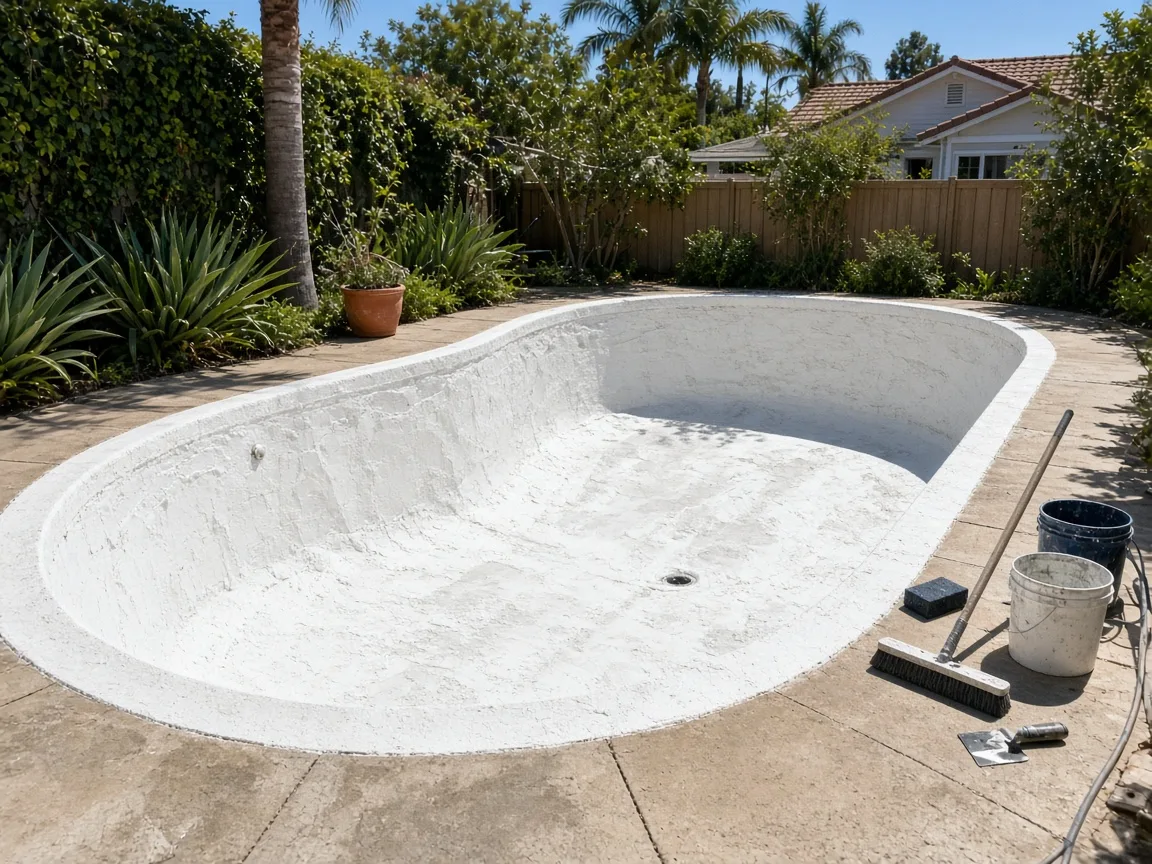
Millions of California homes already have a pool, and many of those pools are decades old. That is why "pool resurfacing cost" is searched more in California than almost any other pool question. If your plaster is rough, stained or flaking, or the tile and coping are cracking, here is how to think about resurfacing versus a full remodel.
Signs your pool needs resurfacing
- Rough patches that snag swimsuits or scrape feet.
- Etching, pitting or chalky plaster.
- Delamination, where the finish sounds hollow or pops off.
- Stains that will not come out with chemistry or acid washing.
- Visible cracks in the finish (a structural crack is a different, bigger problem).
- Water loss you cannot trace to equipment or plumbing leaks.
Finish options
Standard white plaster. The traditional, lowest-cost option. Smooth when new. It usually has the shortest lifespan of the common finishes, and how long it lasts depends heavily on water chemistry.
Colored plaster. Adds color, but can mottle or fade in strong sun.
Quartz aggregate. Plaster blended with quartz for added durability and color depth. A popular mid-range upgrade.
Pebble aggregate. Small pebbles set in cement for a natural look and generally the longest life of the cement-based finishes. More textured underfoot.
Tile. Full glass or porcelain tile interiors are the premium tier, usually reserved for luxury projects.
Builders quote resurfacing by pool size, finish type and prep work needed. Get prices for at least two finish levels so you can see the trade-off between upfront cost and lifespan.
What happens during resurfacing
- The pool is drained. Ask your contractor about local rules for draining pool water into the sewer cleanout versus the street. Many California cities restrict discharge to storm drains.
- The old surface is chipped out or prepared by hydro-blasting or grinding.
- Minor repairs are made and new waterline tile is set if included.
- The new finish is applied, usually in a single day.
- The pool is refilled right away and a careful start-up chemistry routine follows for the first weeks.
Do you need a permit to replaster a pool in California?
It depends on the city and the scope. Simple replastering is often handled without a building permit, while work that changes plumbing, electrical, equipment, structure or decking usually needs one. Check with your local building department, and ask your contractor who will pull any permits.
When a remodel makes more sense
If you are already draining and resurfacing, it can be the cheapest time to make bigger changes:
- New waterline tile and coping.
- Adding a tanning ledge, bench or new steps.
- Converting to a saltwater system.
- LED lighting and automation.
- A variable-speed pump, which California's appliance efficiency rules push replacement pumps toward.
- Bringing safety features up to current standards, such as anti-entrapment drain covers and the drowning-prevention features required when permitted work triggers them.
- New decking, which often transforms the look more than the pool itself.
A full remodel can cost far more than a basic resurface, so ask for the work to be quoted in phases.
How to choose a resurfacing contractor
- Confirm the CSLB license. Pool plastering and remodeling is typically done under the C-53 Swimming Pool classification. Check it on the CSLB license lookup.
- Ask how they prepare the old surface. Good prep matters more than the finish brand.
- Ask what the warranty covers, such as delamination and workmanship, and for how long.
- Ask for the start-up procedure in writing. Many finish problems start in the first month.
- Look at their reviews and recent work.
Making a new finish last
- Keep water balanced. Aggressive or scaling water damages finishes.
- Brush regularly, especially during the start-up period.
- Do not drain the pool yourself during hot weather. Empty pools can be damaged by heat and groundwater pressure.
- Follow the contractor's chemical guidance after replastering.
Bottom line
Resurfacing is the most common big pool project in California. Choose the finish for how long you plan to stay, hire a licensed contractor who prepares the surface carefully, and use the drained pool as a chance to fix tile, equipment and safety at the same time. Our city pages list local builders, many of whom also handle remodels and resurfacing.
Finding a pool builder near you
Our directory covers every California city with at least 20,000 residents. Each city page ranks local pool builders by Google rating weighted by review count, so a builder with hundreds of strong reviews ranks above one with a handful. Where we could confidently match a business to the Contractors State License Board's public license file, we show a CSLB License Verified badge with the license number. Use the filters on each city page to narrow the list to gunite, fiberglass, spa, remodel or decking specialists, then request quotes from at least three builders.
Frequently asked questions
How often does a pool need resurfacing?
It depends on the finish and water chemistry. Plaster typically needs it sooner than quartz or pebble finishes. Many owners resurface every decade or so, but it varies widely.
Do you need a permit to replaster a pool in California?
Often not for replastering alone, but rules vary by city. Changes to plumbing, electrical, equipment or structure usually need a permit. Check with your local building department.
How long does pool resurfacing take?
The finish itself usually goes on in a day, but the full job, including draining, prep, tile work and refilling, often takes about one to two weeks depending on scope and weather.
Can I resurface a pool without draining it?
Full resurfacing requires draining. Some small underwater patch products exist for minor repairs only.
This guide is general information, not legal, tax or financial advice. Costs vary by property and builder. Last updated November 2026.